

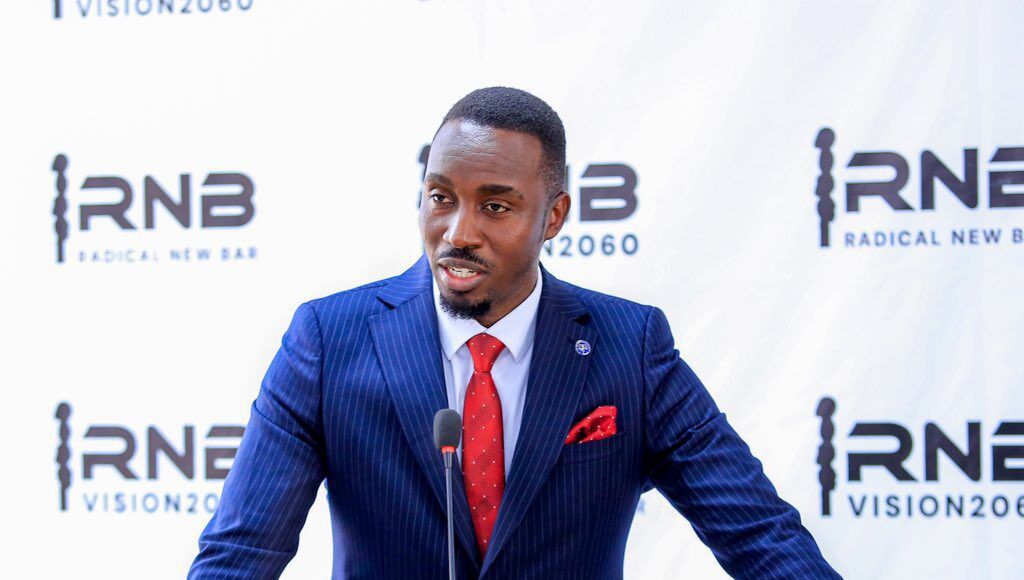
The Uganda Law Society has opposed proposals to extend political terms from five to seven years, warning the move could undermine democratic principles and trigger legal and political confrontation.
The Uganda Law Society (ULS) has strongly opposed emerging proposals to extend the tenure of Members of Parliament and the Executive from five to seven years, cautioning that such a move could erode constitutional safeguards and spark a political and legal crisis.
Speaking during Next Big Talk on Next Radio, ULS Vice President Anthony Asiimwe said the legal fraternity would resist any amendment that fails what he described as the constitutional “litmus test,” particularly if it appears tailored to benefit specific individuals.
“If this rumor of a 7-year term in Parliament has any truth to it, as the Radical New Bar, we will definitely oppose it until it passes the litmus test,” he said.
Asiimwe emphasized that the Law Society has a statutory duty under the Uganda Law Society Act to safeguard public interest, noting that while constitutional amendments are allowed, those that undermine the will of the people would face legal challenge.
“The Constitution is very clear as far as amendments are concerned. It is okay to have amendments, but any amendment that affects the Constitution to the extent of undermining the will of the people will be challenged,” he added.
During the same discussion, Kagoma North MP and NRM Parliamentary Caucus spokesperson Alex Brandon Kintu acknowledged that while the proposal may have initially circulated as speculation, it has featured in broader constitutional reform discussions involving the Ministry of Justice and Constitutional Affairs and the Uganda Law Reform Commission.
Kintu argued that Parliament is aware of the legal and ethical limits of self-serving legislation and would not pass reforms that directly benefit the current legislature.
“Parliament, being a legal institution mandated to enact laws, is aware that it cannot do something that benefits itself. Therefore, even if these extension proposals are brought forward, they cannot benefit the 12th Parliament,” he said.
He added that while longer terms might appeal to individual legislators, they raise significant concerns when viewed through the lens of democratic accountability.
“From an individual perspective, it may seem like a good proposal because it guarantees a job for seven years. However, when viewed from the standpoint of democracy and constitutionalism, it poses a significant challenge,” he said.
Recent confirmation from the Ministry of Justice and Constitutional Affairs indicates that the proposal is under formal consideration as part of a broader constitutional review process. Minister Norbert Mao said the initiative is being driven by recommendations compiled by the Uganda Law Reform Commission.
“After 30 years it is time for an inclusive, transparent and comprehensive review of the Constitution,” Mao said.
The proposal has drawn criticism from opposition leaders and legal analysts, including Ibrahim Ssemujju Nganda, who linked it to past controversial amendments.
“These are selfish individuals who want to stay in office. You cannot benefit from a matter you are part of,” Ssemujju said.
Mityana South MP Richard Lumu raised legal concerns, citing constitutional limits on legislative interference with court decisions.
“Government cannot remove a court judgment. Article 92 is very clear — Parliament cannot alter any judgment of a court,” Lumu said.
Political analyst Yusuf Serunkuma questioned the necessity of the proposed changes, asking what governance problem the amendment seeks to resolve.
“What question is the amendment addressing?” he posed.
Serunkuma warned that extending terms could weaken accountability, reduce public scrutiny, and increase risks of misuse of public resources under prolonged mandates.
The debate has revived longstanding constitutional tensions in Uganda, drawing parallels with previous amendments, including those related to presidential term and age limits.
Legal experts and civil society actors are now calling for a transparent, inclusive, and evidence-based constitutional review process, arguing that reforms should strengthen governance systems rather than alter core democratic safeguards such as electoral cycles.
